


Research on politics, media & technology


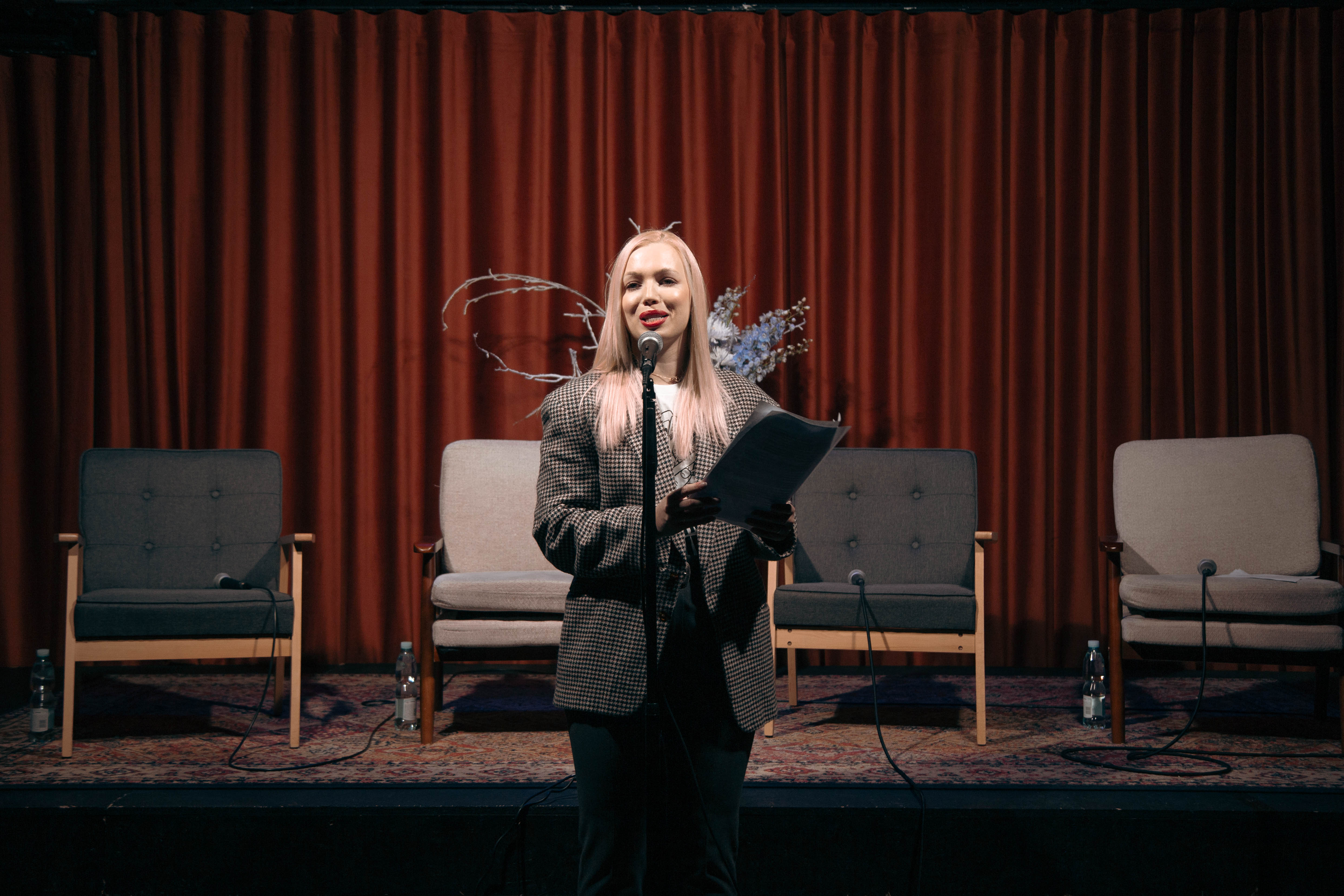

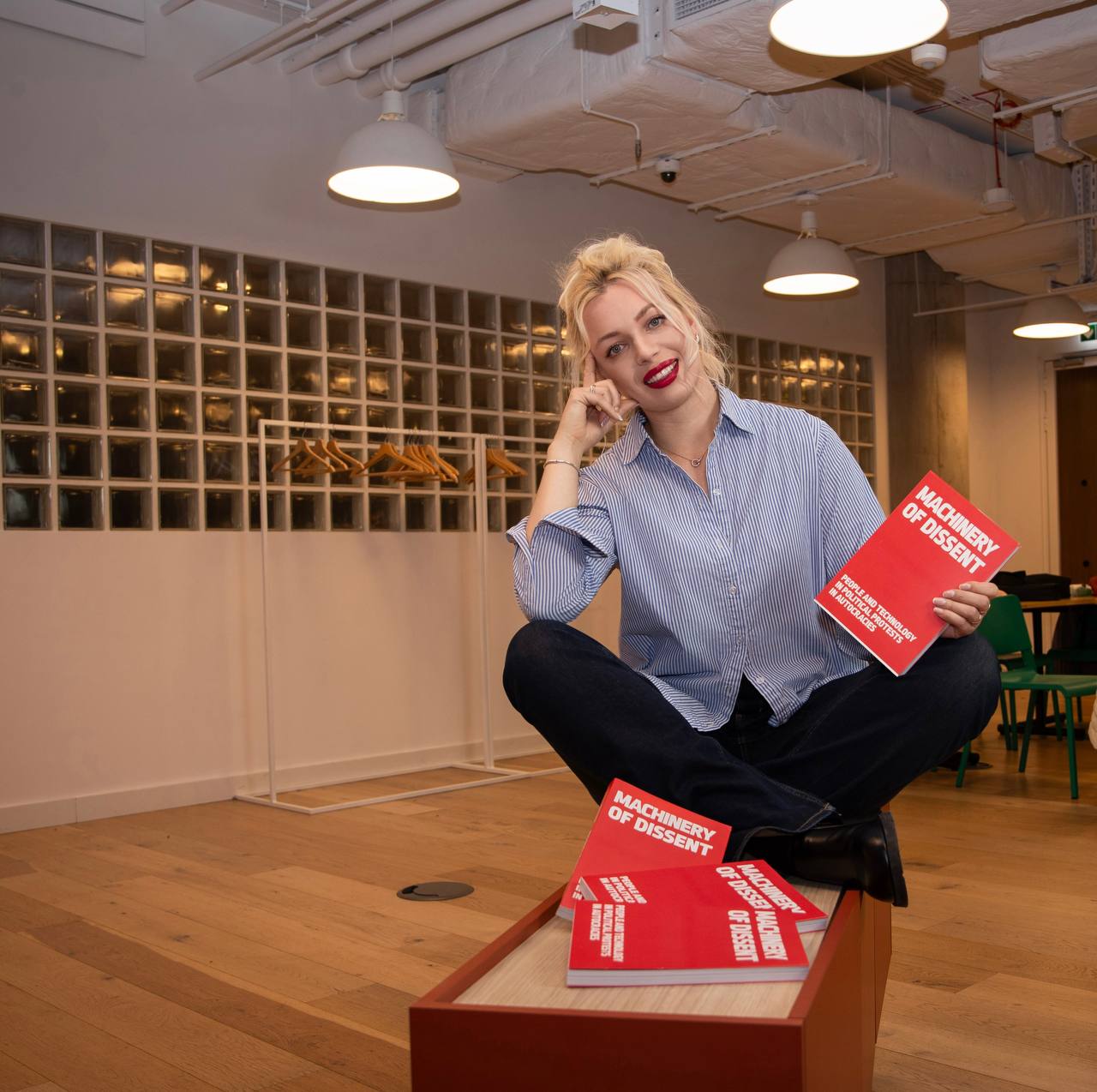
about me
Alesia Rudnik, PhD in political science, is a postdoctoral researcher at Södetrörn University and Maastricht University. Her project “Negotiating Digital Power: Big Tech, States & Citizens in Democratic versus Autocratic Contexts” is supported by the Swedish Research Council.
Alesia is also a former director and an acting board member of an independent Belarusian think tank in exile Center for New Ideas.
Previously, Rudnik led the organization of the Belarusian diaspora in Sweden. She is also a recipient of the Swedish award “European of the Year 2022”. Currently, she is also a member of the editorial board of Belarus Analytical Digest.
.webp)

.webp)

%20(1).webp)


publications and research


The female face of Belarusian resistance
The public role of women in the Belarusian resistance has diminished along with the rise of totalitarianism. But they remain vital drivers for change...


The Belarusian diaspora and its role
The Belarusian diaspora turned into a serious force of political influence across Europe in just a matter of months...


Belarus – where society is deprived of power but not agency
“I was terrified and scared but more than ever before I felt that I am a Belarusian and I could not stay home...

Transformation des politischen Systems / Das Regime und soziale Medien
Das politische System, das derzeit in Belarus aufgebaut wird, ist durch eine vollkommene Absage...


Exiled, but loyal to people: The Belarusian media struggle
The Belarusian political system has rarely been open to freedom of speech and press. Media outlets and the printed press...

Belarusian Change Tracker
Political communication analysis of the Belarusian online platforms, Telegram and TikTok

Legitimierung des Regimes in Belarus
Telegram als Instrument zum Weißwaschen und zur Legitimierung des Regimes in Belarus

The media image of Belarus abroad
Belarus generated considerable media attention in 2020, when active protests were sweeping the country. However...

Belarusian Change Tracker, 7th Edition
Political communication analysis of the Belarusian online platforms, Telegram and TikTok
Routledge Handbook of Contemporary Belarus
This chapter actualizes the concept of place in the context of political protests, and connects it theoretically to the phenomena of protests highly reliant on and mediated by digital technology. Inspired by both social movements and science and technology studies (STS), a discussion is presented on the spatial dimension of contemporary protests and the metaphor of “digital town squares”, which captures the dynamics of contemporary protests.
Routledge Handbook of Contemporary Belarus
Wrote a chapter "Political Protests in Contemporary Belarus: Mobilization, Technology, and (Un)Used Political Opportunities" for The Routledge Handbook of Contemporary Belarus, which presents a thorough introduction and overview of the country's history, politics, and international relations. Belarus is as a country that has attracted increased attention since the mass anti-authoritarian protests of 2020 and the ensuing dramatic changes, including the rise of a digital dictatorship and the use of Belarus’ territory for launching Russia’s attack against Ukraine in 2022.
Russian informational co-aggression? Ukraine-related disinformation in Belarusian pro-government Telegram channels
Based on a qualitative content analysis of 2024 posts from leading pro-government Telegram channels in Belarus, this article examines how these sources spread disinformation about Ukraine. Although the Belarusian regime is often regarded as a co-aggressor in the Russo–Ukrainian war, little is known about whether and how it actively promotes pro-Kremlin narratives online. This article represents a first attempt to address this gap.

Machinery of dissent: Exploring the techno-social practices of modern protests
Focusing on the example of the Belarusian protests of 2020, this article examines the human and non-human labour behind the production of protest mobilisation content, protest coordination, and protest reporting. Based on semi-structured interviews with 18 respondents, the paper is the first to examine the practices and routines of Telegram channel editors and moderators, activists, politicians, and marketing specialists.

TikTok and Telegram: as platforms for political mobilization in Belarus and Russia
This article applies previous research within social movements and democratization
studies about the use of Facebook and Twitter to instigate and
galvanize protests in autocratic countries in order to explore
how protest mobilization on newly politicized platforms such
as Telegram and TikTok is manifested.

Co-option of Technology: Digital Repression and Legitimation Strategies of the Belarusian Regime. Communist and Post-Communist Studies
In the summer of 2020, the Belarusian regime experienced an unprecedented challenge to its power. Large-scale demonstrations erupted across the whole country as a response to a rigged election and police violence against protest participants...

Practices and Agencies in the Belarusian Protests of 2020: Perspectives of Protest Participants and Leaders
This article explores the roles of digital platforms, protesters and protest organisers in mobilising and coordinating prodemocratic protests in Belarus in summer 2020
Belarus’ Pro-Democracy Movement as a Public Diplomacy Actor: Identities and International Engagement
This chapter examines the role of identity in the Belarusian pro-democracy movement’s public diplomacy since the start of the 2020 electoral campaign. Drawing a social constructivist take on public diplomacy, it examines how civil society actors of Belarus challenge and subvert the regime-promoted narratives of national identity in their engagement with foreign audiences.
The female face of Belarusian resistance
The public role of women in the Belarusian resistance has diminished along with the rise of totalitarianism. But they remain vital drivers for change...
The Belarusian diaspora and its role
The Belarusian diaspora turned into a serious force of political influence across Europe in just a matter of months...
Belarus – where society is deprived of power but not agency
“I was terrified and scared but more than ever before I felt that I am a Belarusian and I could not stay home...
Transformation des politischen Systems / Das Regime und soziale Medien
Das politische System, das derzeit in Belarus aufgebaut wird, ist durch eine vollkommene Absage...
Routledge Handbook of Contemporary Belarus
This chapter actualizes the concept of place in the context of political protests, and connects it theoretically to the phenomena of protests highly reliant on and mediated by digital technology. Inspired by both social movements and science and technology studies (STS), a discussion is presented on the spatial dimension of contemporary protests and the metaphor of “digital town squares”, which captures the dynamics of contemporary protests.
Routledge Handbook of Contemporary Belarus
Wrote a chapter "Political Protests in Contemporary Belarus: Mobilization, Technology, and (Un)Used Political Opportunities" for The Routledge Handbook of Contemporary Belarus, which presents a thorough introduction and overview of the country's history, politics, and international relations. Belarus is as a country that has attracted increased attention since the mass anti-authoritarian protests of 2020 and the ensuing dramatic changes, including the rise of a digital dictatorship and the use of Belarus’ territory for launching Russia’s attack against Ukraine in 2022.
Russian informational co-aggression? Ukraine-related disinformation in Belarusian pro-government Telegram channels
Based on a qualitative content analysis of 2024 posts from leading pro-government Telegram channels in Belarus, this article examines how these sources spread disinformation about Ukraine. Although the Belarusian regime is often regarded as a co-aggressor in the Russo–Ukrainian war, little is known about whether and how it actively promotes pro-Kremlin narratives online. This article represents a first attempt to address this gap.
Machinery of dissent: Exploring the techno-social practices of modern protests
Focusing on the example of the Belarusian protests of 2020, this article examines the human and non-human labour behind the production of protest mobilisation content, protest coordination, and protest reporting. Based on semi-structured interviews with 18 respondents, the paper is the first to examine the practices and routines of Telegram channel editors and moderators, activists, politicians, and marketing specialists.
TikTok and Telegram: as platforms for political mobilization in Belarus and Russia
This article applies previous research within social movements and democratization
studies about the use of Facebook and Twitter to instigate and
galvanize protests in autocratic countries in order to explore
how protest mobilization on newly politicized platforms such
as Telegram and TikTok is manifested.
Co-option of Technology: Digital Repression and Legitimation Strategies of the Belarusian Regime. Communist and Post-Communist Studies
In the summer of 2020, the Belarusian regime experienced an unprecedented challenge to its power. Large-scale demonstrations erupted across the whole country as a response to a rigged election and police violence against protest participants...
Practices and Agencies in the Belarusian Protests of 2020: Perspectives of Protest Participants and Leaders
This article explores the roles of digital platforms, protesters and protest organisers in mobilising and coordinating prodemocratic protests in Belarus in summer 2020
Belarus’ Pro-Democracy Movement as a Public Diplomacy Actor: Identities and International Engagement
This chapter examines the role of identity in the Belarusian pro-democracy movement’s public diplomacy since the start of the 2020 electoral campaign. Drawing a social constructivist take on public diplomacy, it examines how civil society actors of Belarus challenge and subvert the regime-promoted narratives of national identity in their engagement with foreign audiences.
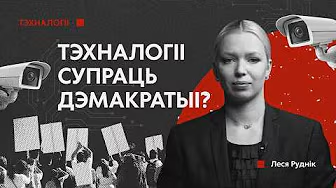
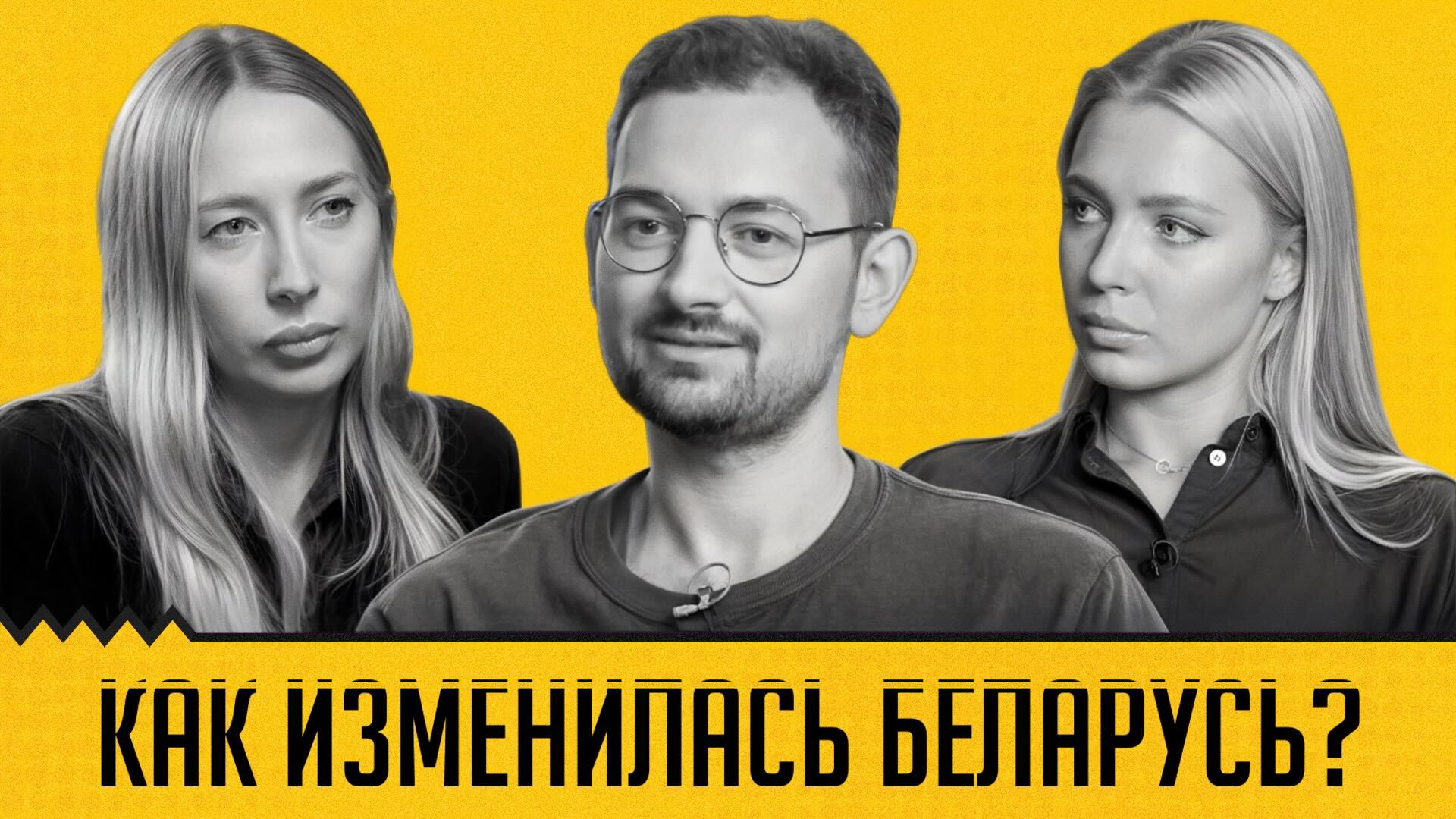
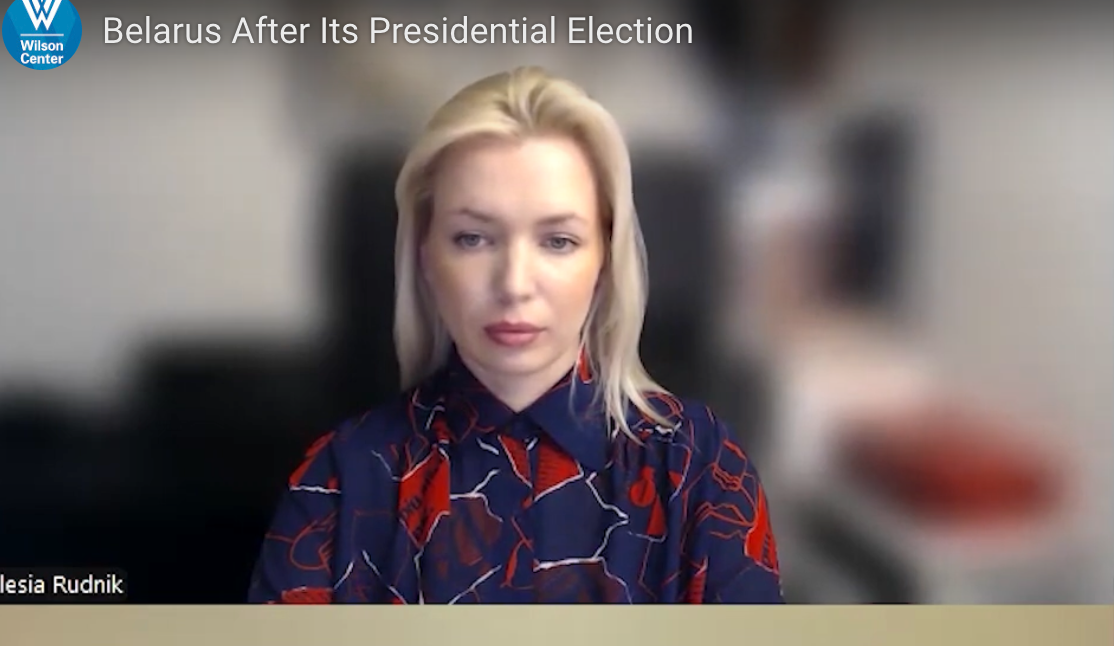
Video materials






conference participation

awards


additional education
/ Swedish Institute Leader Lab 2024
April - November 2024

/ SMM for Belarus, IPM (Belarus)
May-July 2020

/ Young Leadership Program at Georgian Institute for Strategic Studies
March 2019

/ Certificate of completion of the distance course "Public Policy and Administration" at SYMPA, Minsk
September 2016

/ Completed “Youth in Action” Training Course in Project management, Germany
November 2015

/ Completed a course, “Business and Management,” by EHU MBA
November 2012 – March 2013
phd thesis
This doctoral thesis investigates the role of technology as a counterpart to protesters within authoritarian regimes, focusing on its active integration into political dissent. By examining two empirical cases – the incorporation of Telegram and TikTok into the Belarusian protests of summer 2020 and the Russian protests in January 2021 – the thesis explores how digital platforms are drawn into protests through socio-technical networks co-mediated by humans and technology. By tracing the functioning of the sociotechnical network and agencies involved, this thesis offers both an empirical investigation and a conceptual framework for understanding how technology becomes part of political struggle within autocratic regimes.
Click here to order my dissertationMentorship
I regularly consult and mentor undergraduate and graduate students, as well as NGOs and organizations, who seek to refine their research methodologies, develop coherent research designs, and make informed analytical and strategic choices. I offer consultation and mentorship on qualitative and mixed methodologies, including thematic analysis, qualitative data analysis, and interview-based research, as well as support with data interpretation and the articulation of research findings. In addition, I advise on how to present and communicate project results effectively to wider audiences, including through social media, LinkedIn, media engagement, and other public-facing or professional platforms, while aligning dissemination strategies with academic, policy, or organizational goals.
Order your consultation hereget in touch
Through the form to the right you can contact me here with requests regarding written analysis, propose academic collaboration or invite me as a speaker to your event.


